fbpx

Social Economy Barometer, 2025 Edition: 10 years after the framework law, the sector of social impact organizations confirms its accelerated growth in Romania

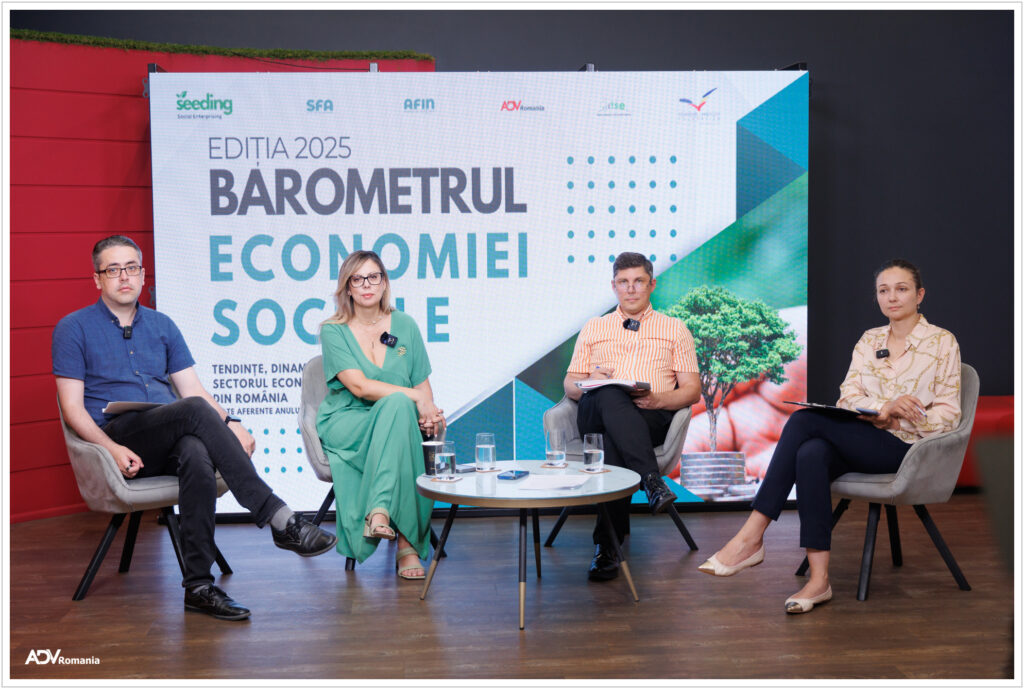
June 24, 2025, IașiADV Romania, together with the Social Finance Association, AFIN IFN S.A., and the Romanian Social Economy Network (RISE Romania) officially launched the annual report "Social Economy Barometer", the most comprehensive study dedicated to the performance and impact of the social economy in Romania. Now in its fourth edition, the report combines official statistical data with a national survey conducted among social enterprises and will serve as a foundation for the new Social Economy Development Strategy that the Ministry of Labour is set to draft in the coming period.

A scientific study with systemic relevance

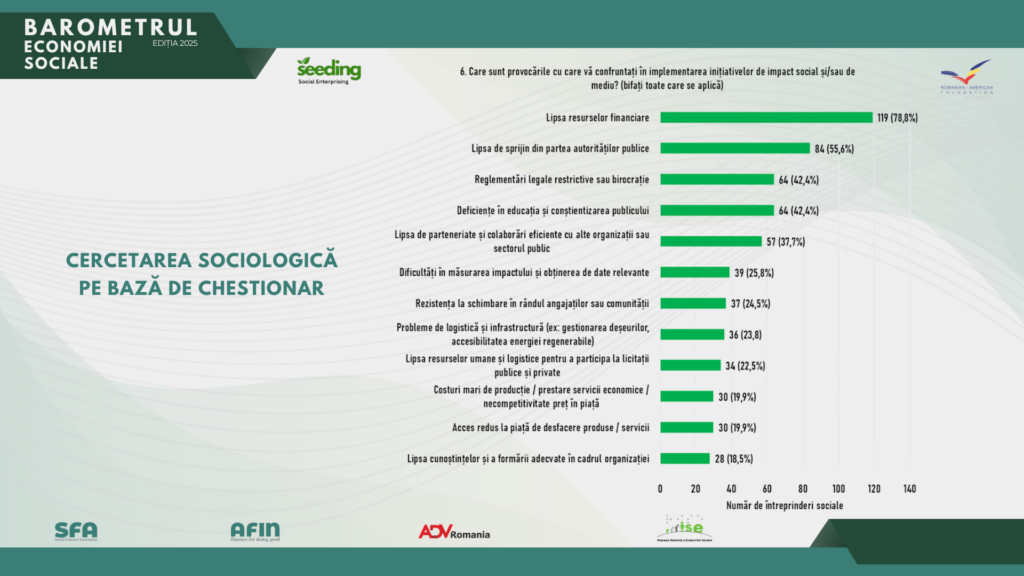
The Social Economy Barometer is the result of an extensive scientific study that explores two essential dimensions for understanding and advancing this sector. On one hand, the study looks retrospectively, offering an in-depth analysis of the evolution of the social economy over the past ten years—highlighting major growth directions as well as the bottlenecks that have hindered its full potential. On the other hand, the research is forward-looking, proposing concrete solutions and emphasizing the key public policies that need to be implemented to strengthen the social economy in Romania, enabling it to become a true engine of inclusion and sustainability.

  1. Retrospective analysis of the sector’s evolution over the past decade, with a focus on development pace, areas of progress, and structural bottlenecks.
  2. Forward-looking projections, featuring development scenarios and public policies needed for the social economy to become a pillar of social inclusion and the green transition in Romania.

Diagnosis: socio-economic realities that demand immediate action

The study highlights a socio-economic landscape marked by systemic vulnerabilities:

  • 27.9% of Romanians are at risk of poverty or social exclusion;
  • 33.8% of children live in poverty, above the EU average (24.2%);
  • 19.3% of young Romanians aged 15 to 29 are classified as NEET (not in employment, education, or training), with an alarming 24.8% among young women—the highest rate in the European Union;
  • Early school leaving reached 16.8% in 2024 – the highest rate in the EU;
  • Only 12.8% of GDP is allocated to social protection – among the lowest levels in the European Union.

Acești indicatori arată urgența unor mecanisme alternative de incluziune. În acest context, economia socială apare ca o soluție pragmatică și imediată, capabilă să creeze oportunități concrete pentru cei marginalizați de economia tradițională.

The performance of the social economy: an underutilized strategic resource

The data from the 2025 edition of the Social Economy Barometer reveals that:

  • Romania has 122,754 social impact entities;
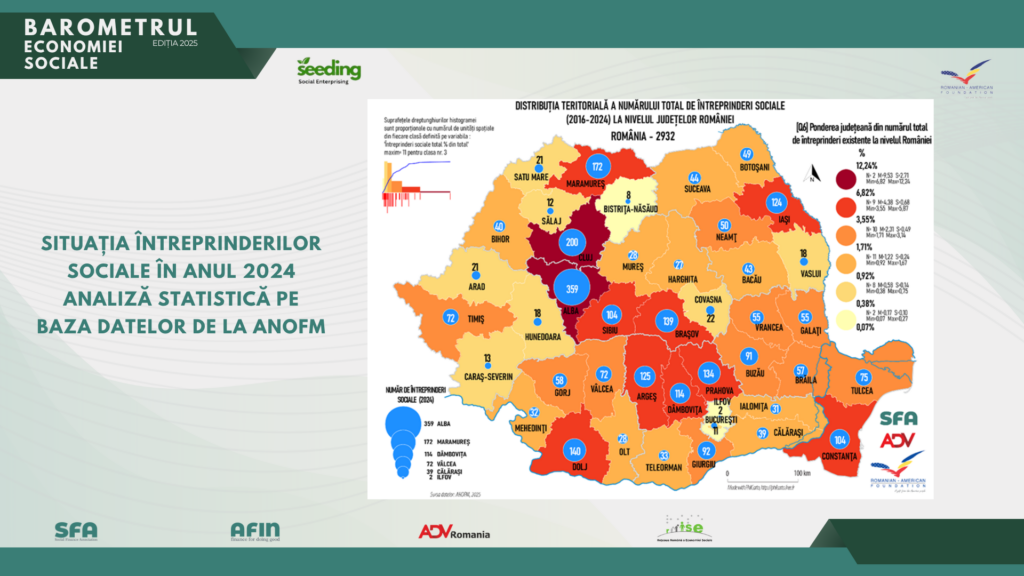
  • Out of 2,932 certified social enterprises between 2016–2024, only 1,836 still hold active certification. These enterprises have created 4,036 jobs and contributed 96.5 million RON (0.03% of GDP);
  • Through the ESF+, Just Transition, and ITI Danube Delta programs, over 6,800 new social enterprises are expected to emerge by 2026, creating nearly 30,000 jobs—two-thirds of which will be for individuals from vulnerable groups.

The social economy is the missing link between poverty reduction policies, the labor market, and the green transition. With the right financing instruments, political will, and genuine partnerships, this sector can become the main driver of social inclusion in Romania.” – Angela Achiței, președintele Grupului ADV România.

A new vision for the development of the social economy by 2030

The ADV RomaniaSocial Finance AssociationAFIN IFN S.A.RISE Romania – Romanian Social Economy Network ecosystem puts forward an ambitious vision:

By 2030, the social economy should become the main driver of inclusive employment, quality community services, and the green transition, doubling its economic footprint and contributing to the reduction of social exclusion in the most vulnerable communities.

This transformation requires:

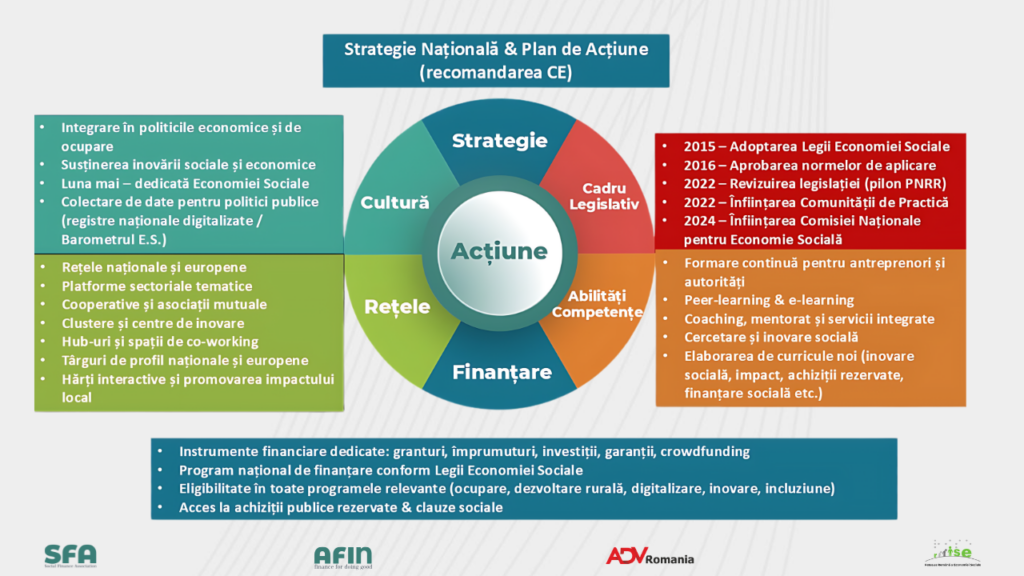
  • A coherent and modernized legislative framework, with real incentives and support measures;
  • A tailored financing mix – grants, loans, social investments, and reserved public procurement;
  • Investments in skills and continuous training for entrepreneurs and local authorities;
  • Thematic networks and platforms for cooperation, social innovation, and impact promotion.

Social Economy Barometer: a starting point for the new national strategy 2025–2032

In the second half of 2025, the Ministry of Labour, Family, Youth and Social Solidarity will launch the process of drafting the National Strategy for the Development of the Social Economy (2025–2032), using multiple data sources and contextual analyses as a foundation—including the findings of the Social Economy Barometer. The results of the study will also be presented to the interministerial working group and will contribute to shaping funding and regulatory priorities.

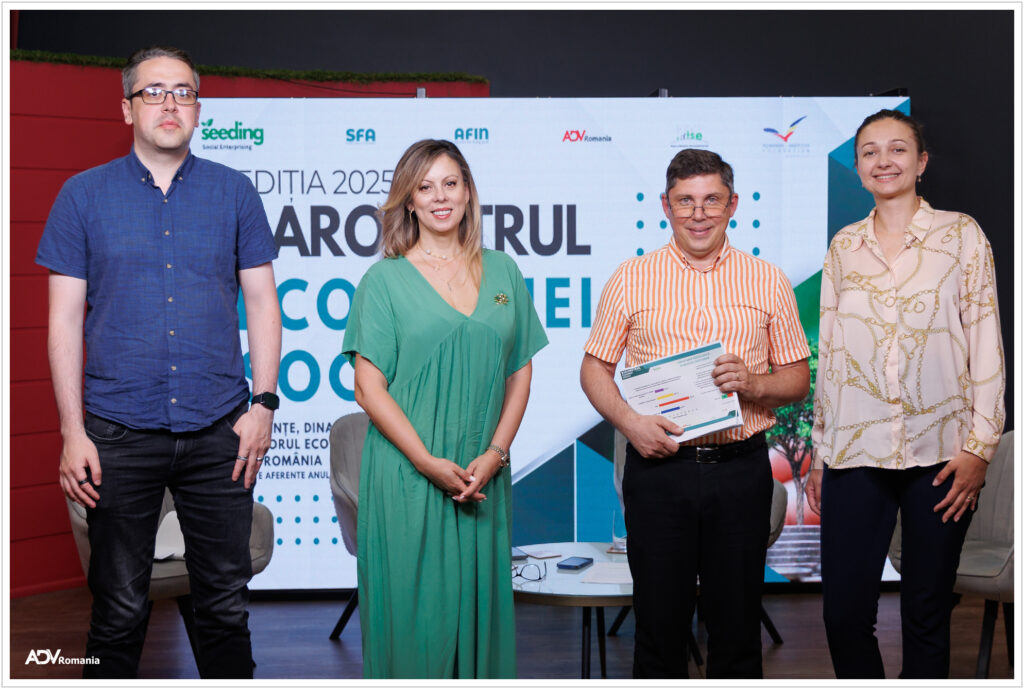
The official launch of the 2025 edition of the Social Economy Barometer was attended by the report’s authors:
Assoc. Prof. Dr. Ciprian Iftimoaei (Petre Andrei University of Iași) and Lecturer Dr. Vicențiu-Robert Gabor (Alexandru Ioan Cuza University of Iași), along with Angela Achiței (President of ADV Romania) and Elena Vasiliu, who moderated the event.

Useful resources

All four editions of the Barometer are available online, providing access to essential data, analyses, and recommendations for decision-makers, social entrepreneurs, and public institutions ➡ [https://alaturidevoi.ro/barometrul-economiei-sociale-in-romania/](https://alaturidevoi.ro/barometrul-economiei-sociale-in-romania/)

The full recording of the launch event is also available on the ADV Romania YouTube channel ➡ [https://www.youtube.com/watch?v=MTME8OIvzGY](https://www.youtube.com/watch?v=MTME8OIvzGY)

📎 Raportul complet este disponibil aici: